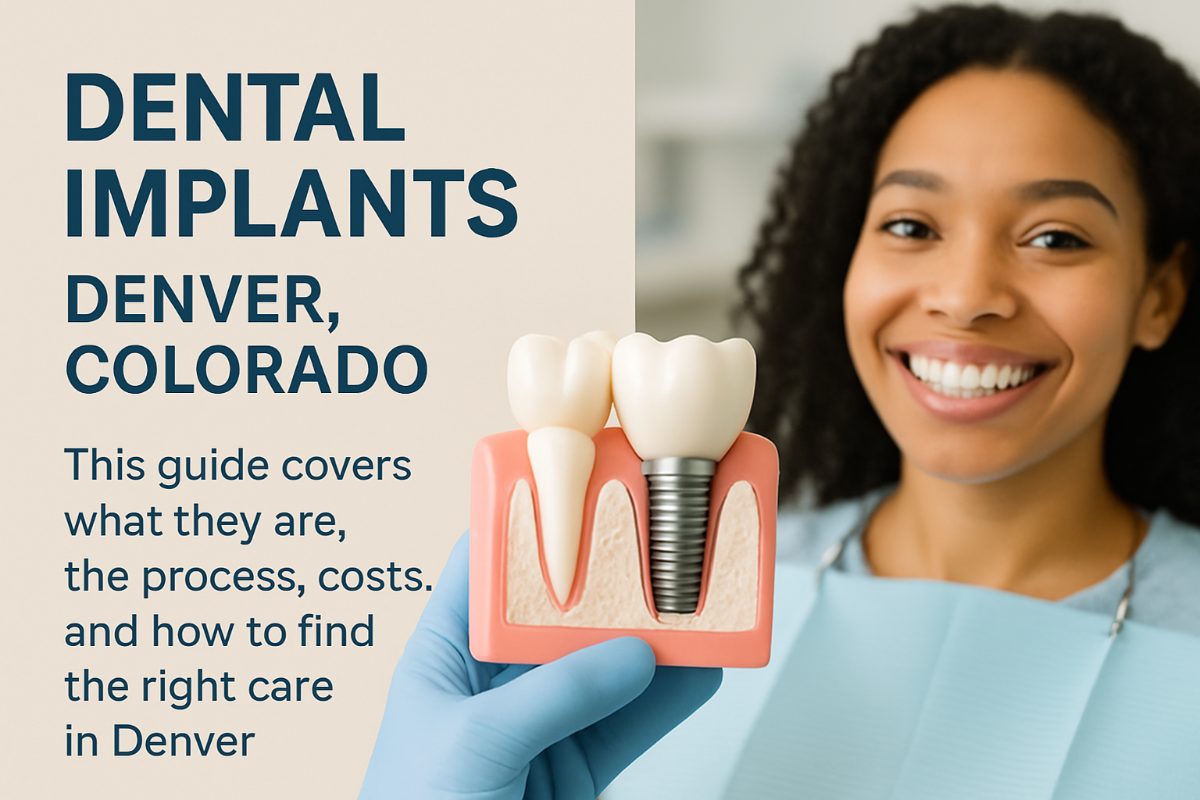
Thinking about a dental implant? This quick guide explains what a dental implant denver colorado is, who benefits, and what to expect from evaluation to recovery. Read on for clear steps, common risks, cost factors, and how to choose care in the Denver area.
What is a dental implant?
A dental implant replaces a missing tooth with a long-term solution that looks and acts like a natural tooth. It has three main parts: the implant (a titanium or zirconia screw placed into the jawbone), the abutment (the connector), and the crown (the visible tooth). Implants fuse with bone over time, creating a stable base.
Materials: most implants use titanium for strength and bone compatibility. Zirconia implants are metal-free alternatives for patients with metal sensitivities. Benefits over dentures or bridges include stronger chewing power, no need to reshape adjacent teeth, better bone preservation, and a more natural feel and appearance. If you search for dental implant denver colorado, you’ll find options that use modern digital planning and materials like zirconia and titanium.
Who is a good candidate for a dental implant?
Good candidates are people with one or more missing teeth, adequate jawbone to support an implant, healthy gums, and medical conditions that are controlled (for example, diabetes under good control). Age alone is not a barrier.
When extra treatment is needed: some patients need bone grafts or a sinus lift to build enough bone. Smokers and people on certain medications (like some osteoporosis drugs) have higher risks and may need special planning. Your dentist will review your health history and scans to decide if implants are appropriate.
The dental implant procedure and recovery
Step-by-step timeline
- Consultation and imaging: exam, X-rays or CBCT 3D scan, and a treatment plan.
- Implant placement: the implant is surgically placed into the jawbone under local or IV sedation.
- Osseointegration: bone grows around the implant over 3–6 months to secure it.
- Abutment and crown: once stable, the abutment is attached and a custom crown is placed.
Recovery and risks
Typical healing includes mild swelling and soreness for a few days after placement. Full osseointegration can take several months. Common side effects are bruising, bleeding, and temporary sensitivity. Watch for signs of complications: prolonged severe pain, fever, pus, or loosening of the implant. These require prompt follow-up.
Costs, alternatives, and finding care for dental implant
Costs vary by the number of implants, need for grafting, materials (titanium vs. zirconia), and lab fees. Financing and dental insurance may cover part of the cost; many practices offer payment plans to spread treatment expenses. Alternatives include bridges or partial dentures—those can be faster and less expensive but may sacrifice long-term bone health or require altering adjacent teeth.
To choose a qualified provider for dental implant denver colorado, look for training and experience in implants, specialty credentials (prosthodontist or oral surgeon), patient reviews, and modern digital tools like CBCT and guided surgery. Schedule a consultation if you have missing teeth or trouble with dentures.
Dental Associates of Colorado offers multidisciplinary care with a prosthodontist and an oral & maxillofacial surgeon working together, digital imaging, an in-house lab, and sedation options to simplify complex implant cases. Ask about their team’s experience, technologies, and financing during your visit to see if implants are right for you.