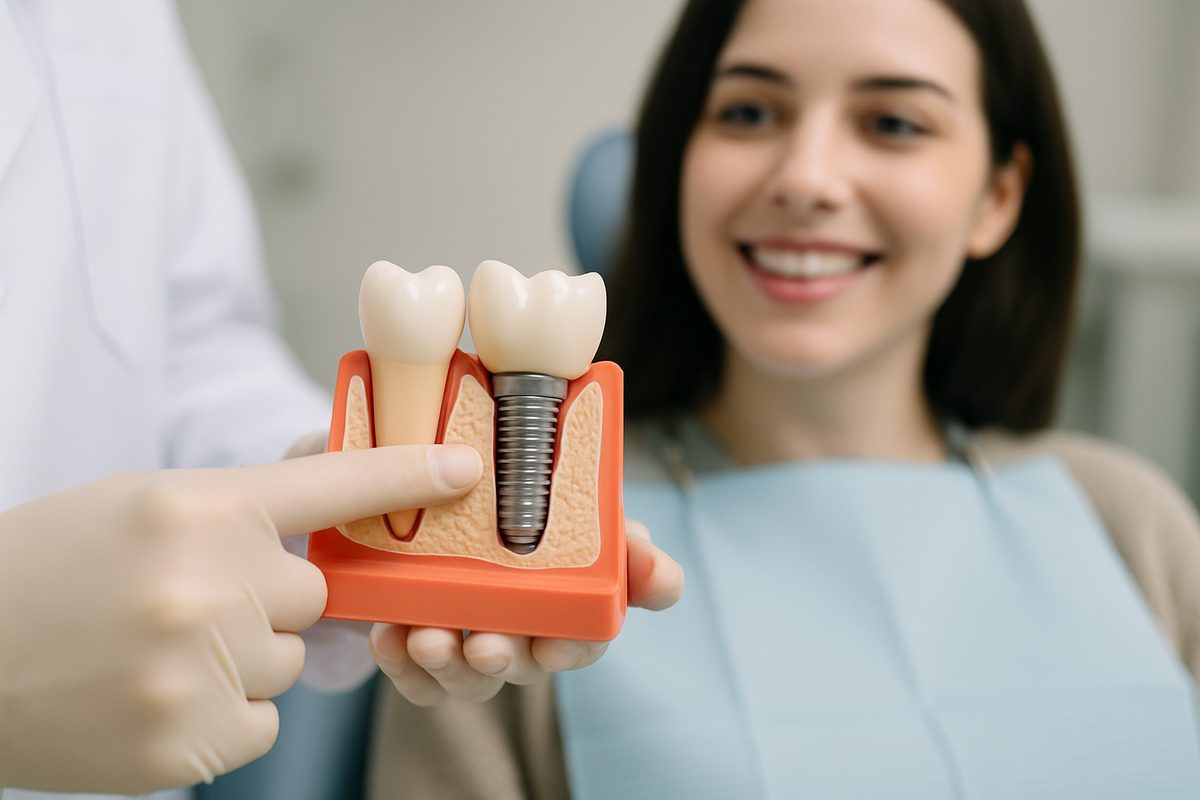
Many people search for “teeth inplant” (a common misspelling of “teeth implant”) when they are missing one or more teeth and want a long-term solution. This post explains what a tooth implant is, the main options, who makes a good candidate, what to expect during treatment, risks and costs, and practical questions to ask. Read this if you’re considering dental implants and want a clear, plain-language guide before your consultation.
What Is a Teeth Inplant?
A teeth inplant is a dental implant system that replaces a missing tooth or teeth. It has three parts: the dental implant body (a screw placed in the jawbone), an abutment (a connector), and a tooth crown or prosthesis (the visible tooth). Over time the dental implant bonds to bone, creating a stable foundation that looks and functions like a natural tooth.
Common Types of Dental Implant Options
Single-tooth dental implant
A single-tooth dental implant replaces one missing tooth with one dental implant and a tooth crown. It’s strong, preserves nearby teeth, and usually takes a few months from placement to final tooth crown, depending on healing.
Implant-supported bridge
When several adjacent teeth are missing, an implant-supported bridge uses two or more dental implants to hold a bridge. This replaces multiple teeth with fewer dental implants and avoids drilling healthy neighboring teeth.
Full-arch / All-on-X dental implants
Full-arch / All-on-X options replace all upper or lower teeth using four to six dental implants that support a fixed prosthesis. Removable overdentures are another option that snaps onto dental implants for easier cleaning. Materials vary from acrylic to strong zirconia or metal-framework prostheses.
Immediate (same-day) dental implant vs staged approaches
Immediate loading places a temporary tooth the same day as the dental implant. It offers faster results but needs good bone and careful planning. Staged approaches wait for full bone integration and may be safer for complex cases.
Who Is a Good Candidate for a Dental Implant?
Good candidates generally have healthy gums and enough jawbone to support a dental implant. Chronic conditions like uncontrolled diabetes or heavy smoking can raise risks but don’t always rule someone out. Older age alone isn’t a problem. When bone is too thin or low, grafting or sinus lifts may be recommended before dental implant placement.
What to Expect: The Teeth Inplant Process
Consultation and imaging
A dentist uses CBCT scans and digital impressions to plan exact dental implant size and position. Good planning reduces surprises and speeds treatment.
Surgical placement and sedation options
Dental implants are placed under local anesthesia, nitrous oxide, oral sedatives, or IV sedation options depending on comfort needs. Surgery is routine but should be done by trained clinicians with surgical backup.
Healing, restoration, and follow-up
Healing (osseointegration) usually takes weeks to months. Once stable, the final tooth crown, dental bridge, or denture is attached. Regular follow-ups and oral hygiene keep dental implants healthy.
Risks, Complications, and How to Lower Them
Risks include infection, dental implant failure, and peri-implantitis (gum disease around dental implants). Choosing experienced providers, using guided surgery, maintaining excellent oral hygiene, and attending follow-ups reduce these risks.
Cost Factors and Financing for Dental Implants
Costs depend on number of dental implants, grafts, materials (titanium vs. zirconia), and lab work. Insurance may cover part of the restoration but rarely the entire dental implant. Many offices offer financing plans to spread payments.
Why Choose Dental Associates of Colorado for Dental Implant Care
Dental Associates of Colorado offers a multidisciplinary team led by prosthodontist Seung H. Lee, DDS, and oral surgeon Jonathan Jundt, MD, DDS. They use on-site CBCT, digital scans, guided surgery, sedation options, and an in-house lab that supports same-day restorations for predictable, coordinated care.
How to Prepare and Questions to Ask Before Getting a Dental Implant
Follow pre-op instructions about medications and fasting, and arrange a ride if sedated. Ask about the doctor’s implant experience, materials used, expected timeline, total cost, warranty, and aftercare policies.
Thinking About Dental Implants? Get a Clear, Easy Guide Before Your Consultation
If you’re considering a teeth inplant, schedule a consultation to review your scans and get a personalized plan. A clear exam and honest discussion will show whether implants are the right choice for your smile.