Dental implants are a strong, long-term way to replace missing teeth, but they’re not the right choice for everyone. If you live near Aurora, weighing the pros & cons of dental implants in Aurora, CO matters because the decision impacts your health, budget, and daily life. This guide gives clear, practical information about what implants are, the main benefits and downsides, who makes a good candidate, alternatives, costs and timelines, and questions to ask at a consultation. Read on for a balanced, local-focused look so you can make an informed choice.
What Are Dental Implants?
Dental implants are artificial tooth roots placed into your jawbone to hold a replacement tooth or bridge. A typical implant has three parts: the implant (a titanium or zirconia post), the abutment (connector), and the crown (the visible tooth). Common setups include single implants for one tooth, implant-supported bridges for several teeth, and full-arch solutions for replacing all teeth. Unlike removable dentures or a traditional bridge, implants fuse with the bone and act like natural teeth, offering greater stability and function.
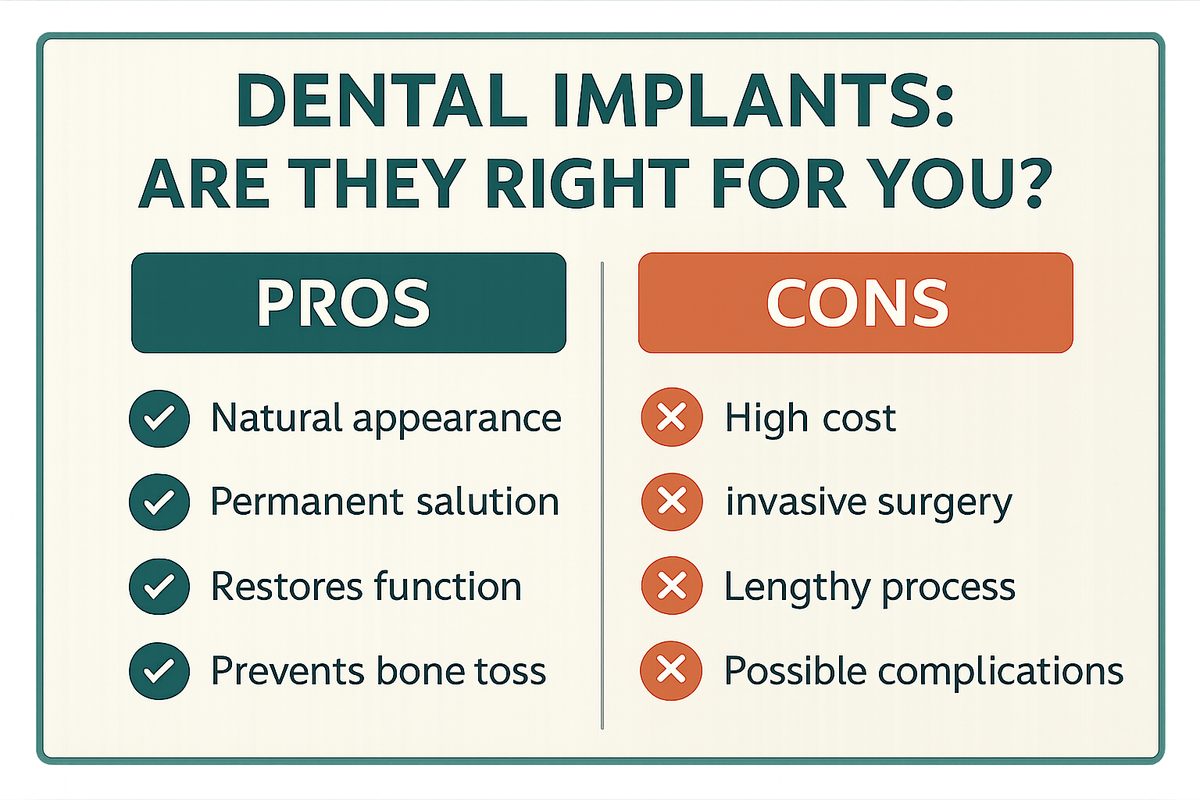
Main Pros: Key benefits and the pros & cons of dental implants in Aurora, CO
Improved chewing, speech, and daily comfort
Implants feel and function more like natural teeth than removable dentures. That means you can chew a wider range of foods, speak without worrying about slipping, and generally feel more comfortable throughout the day. For people who avoid hard or crunchy foods with dentures, implants can restore a normal diet and improve nutrition and confidence.
Longevity and durability
With good care, implants can last decades. The implant post is typically titanium or zirconia, both strong and biocompatible. While the crown may need replacement over many years, the implant itself often remains. Over the long run, implants can be more cost-effective than repeating denture or bridge work because they need fewer replacements.
Bone preservation and oral health
When a tooth is missing, the jawbone nearby can shrink over time. Implants mimic a natural tooth root and stimulate the bone, helping prevent bone loss and helping keep neighboring teeth stable. This preserves facial structure and reduces the chance of future dental problems linked to shifting teeth.
Natural appearance and stability
Implant crowns are designed to match your other teeth in shape and color. Because implants are secure in the bone, they don’t move like some dentures. This stability improves chewing and smiling with confidence, and can support a fuller facial profile that might otherwise sag after tooth loss.
Main Cons: Common risks and drawbacks when evaluating pros & cons of dental implants in Aurora, CO
Surgical risks and recovery time
Placing implants requires oral surgery. Typical risks include infection, bleeding, or temporary nerve irritation. Healing can take weeks to months as the implant bonds to the bone (osseointegration). You may need time off work or rest after surgery, and short-term discomfort, swelling, or dietary limits are common during recovery.
Out-of-pocket cost and insurance limits
Implants are more expensive upfront than bridges or dentures. Costs include consultation, imaging, surgery, and the final crown or prosthesis. Many dental plans limit or exclude implant coverage, leaving patients to pay significant out-of-pocket expenses. For some people, the upfront cost is a major barrier despite the long-term value.
Possible complications and failure rates
Most implants succeed, but failures do occur. Peri-implantitis (inflammation around the implant), implant loosening, or rejection are possible. Risk increases with smoking, poor oral hygiene, uncontrolled diabetes, or certain medications. Prompt follow-up care and good home care reduce risk, but complications can require additional treatment or implant removal.
Need for additional procedures
Not everyone has enough bone to support an implant. Some patients need bone grafts, sinus lifts, or extractions before implant placement. These added procedures increase treatment time, cost, and recovery. In complex cases, multiple appointments and specialists may be needed to achieve the right outcome.
Who is a good candidate? How to weigh the pros & cons of dental implants in Aurora, CO for your situation
Good candidates generally have healthy gums, adequate jawbone, and reasonable overall health. Non-smokers or those willing to quit do better. Controlled medical conditions like diabetes can still allow implants if managed. Age alone isn’t a barrier — older adults often do well. Contraindications include untreated gum disease, heavy smoking, certain bone diseases, or medications that affect bone healing. Discuss your medical history and habits with a provider to see how risks apply to you.
Alternatives to Implants: Comparing pros & cons of dental implants vs. bridges and dentures
Fixed bridges attach to neighboring teeth and are less invasive initially, but they require altering healthy teeth and may not prevent bone loss. Removable dentures are the least expensive upfront and can replace many teeth, but they may slip, limit diet, and need periodic replacement. Implants offer the best long-term function and bone preservation but cost more and require surgery. For short-term or budget reasons, bridges or dentures may be sensible; for long-term oral health and feel, implants are often the better choice.
Cost, financing, and what to expect for patients considering the pros & cons of dental implants in Aurora, CO
Local costs vary based on the number of implants, need for grafts, and the type of final restoration. Expect separate fees for consultation, 3D imaging, surgery, the implant post, and the crown. Ask for a written estimate that breaks down each part. Many practices offer financing, monthly payment plans, or partnerships with third-party lenders to spread costs. Compare estimates from providers and confirm what’s included to avoid surprise fees.
How to reduce risks and improve success rates for implants
Start by treating any gum disease and improving oral hygiene before implant work begins. Quit smoking and control systemic conditions like diabetes. Choose a provider that uses 3D imaging and careful planning to place implants in the best position. Follow post-op instructions closely: take prescribed meds, keep the site clean, eat soft foods as advised, and attend follow-up visits. Regular dental cleanings and daily brushing and flossing are essential to protect implants long-term.
Why consider a multi-specialty practice for dental implants in Aurora, CO
A multi-specialty practice can streamline care by offering surgery, restorative work, and follow-up under one roof. This reduces referrals, speeds coordination, and typically improves quality control when teams work together. Some practices also offer in-house labs, same-day crowns, sedation options, and advanced implant materials like zirconia. These features can address several common cons—fewer appointments, cohesive treatment planning, and improved comfort during surgery and recovery.
Questions to ask at your implant consultation
– Who will place the implant and who will do the final restoration? – How many similar cases have you completed and what is your success rate? – What imaging and planning tools will you use (CBCT/3D imaging)? – What is the full estimated cost, with a breakdown of each step? – Will I likely need bone grafts, sinus lifts, or extractions? – What are my anesthesia or sedation options? – What is the expected timeline from surgery to final crown? – What is the emergency plan if something goes wrong? – What ongoing maintenance will I need?
Typical timeline and what to expect after getting implants near Aurora, CO
A common timeline is: consultation and imaging; surgical placement of the implant; a healing period (3–6 months) for osseointegration; then placement of the abutment and final crown. Some cases use immediate loading (temporary tooth same day), while others require a staged approach. Expect initial soreness and swelling after surgery, gradual improvement over days to weeks, and routine check-ups during healing. Contact your provider if you see persistent severe pain, swelling that worsens, fever, or drainage.
Conclusion — Making the decision: Balancing the pros & cons of dental implants in Aurora, CO
Choosing implants means weighing long-term benefits—better function, bone preservation, and lasting results—against surgical risks, longer treatment time, and higher upfront cost. For many patients, implants are worth the investment. For others, bridges or dentures may be a reasonable short-term choice. To get a clear, personalized recommendation, schedule a consultation with a local multi-specialty provider who can review your health, imaging, and budget. Dental Associates of Aurora offers coordinated implant care with specialists and digital planning to help you understand options and costs. Call to arrange a consult and get a detailed treatment plan and estimate tailored to your needs.