Dental implants are a permanent way to replace missing teeth. This post answers how does tooth implant work in plain language, walks through the usual steps and timeline, and explains what to expect before, during, and after treatment.
What is a dental implant?
A dental implant is a replacement tooth built from three parts: the titanium implant (the root) that goes into your jawbone, the abutment that connects the implant to the visible tooth, and the crown or prosthesis that looks and functions like a natural tooth. Implants act like real tooth roots by anchoring into bone, which helps preserve jaw strength. Unlike bridges, implants don’t rely on neighboring teeth for support, and unlike removable dentures, they’re fixed and feel more like natural teeth.
How does tooth implant work: step-by-step
1. Consultation & planning
The process begins with a clinical exam and digital imaging. Your dentist uses intraoral scans and often a CBCT 3D scan to check bone volume, nerve position, and sinus anatomy. This lets the team plan the best spot, angle, and size for the implant. Plans vary by need — single tooth, several implants, or full-arch rehabilitation.
2. Implant placement surgery
During surgery the titanium post is placed into the jawbone. Local anesthesia and optional sedation (nitrous, oral, or IV) keep you comfortable. Many practices use guided surgery based on your digital plan to place implants precisely, which lowers risk and speeds recovery.
3. Healing and osseointegration
After placement the bone fuses to the implant in a process called osseointegration. This provides a stable, long-term anchor. Healing usually takes several weeks to a few months. Temporary crowns or removable teeth can be used while the site heals, depending on the case.
4. Abutment & final restoration
Once the implant is integrated, the abutment is attached and the final crown, bridge, or full-arch prosthesis is fitted. The dentist checks fit, bite, and shade, then makes any final adjustments so the restoration looks natural and feels comfortable.
Who is a good candidate?
Good candidates have healthy gums, enough jawbone, and general good health. Non-smokers do best, but smokers can still get implants if they quit or reduce use. Patients with bone loss may need bone grafting or a sinus lift first; these procedures can rebuild bone to support implants.
Common technologies and procedures that improve outcomes
Modern tools make implants safer and faster. Digital intraoral scans and CBCT 3D imaging improve planning. Guided surgery increases accuracy. Lasers help with soft-tissue work and uncovering implants. In-house labs and same-day prosthetics can reduce visits and speed final restoration.
Timeline, recovery, and what to expect after surgery
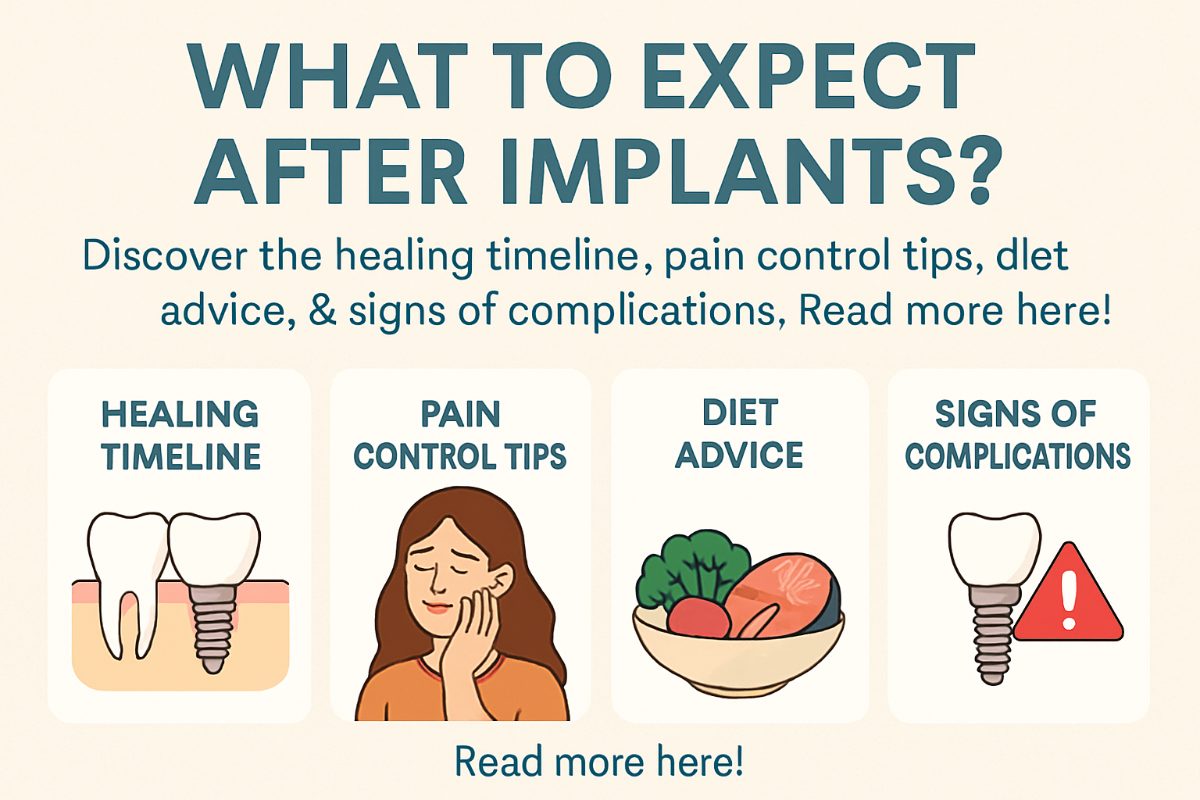
Expect minor swelling and soreness for a few days, with most pain controlled by over-the-counter or prescribed meds. Eat soft foods during initial healing. Follow-up visits check healing and remove sutures if needed. From first consult to final crown is often 3–6 months, though some cases are faster with same-day protocols.
Costs, insurance, and financing basics
Costs vary by number of implants, need for grafting, implant materials, and whether same-day prosthetics are used. Insurance may cover part of the crown or some surgical costs but often has limits. Many practices offer financing or payment plans to spread costs and make care affordable.
Why choose a multidisciplinary, specialty-led team for complex implant care
Complex cases benefit from coordinated care between prosthodontists and oral surgeons. Specialty-led teams improve planning, sedation options, and prosthetic outcomes. An on-site lab and experienced technicians speed adjustments and help ensure a precise fit and natural look.
Dental Associates of Colorado provides multidisciplinary implant care across Aurora and Westminster. Their team includes a prosthodontist and an oral & maxillofacial surgeon, digital imaging, sedation options, and an in-house lab to help deliver predictable, efficient results.
Next steps — how to get started
To move forward, schedule a consultation and bring any recent x-rays or scans. Ask about imaging, sedation choices, timelines, and financing. Request an implant evaluation or a second opinion to learn the best plan for your smile and long-term oral health.