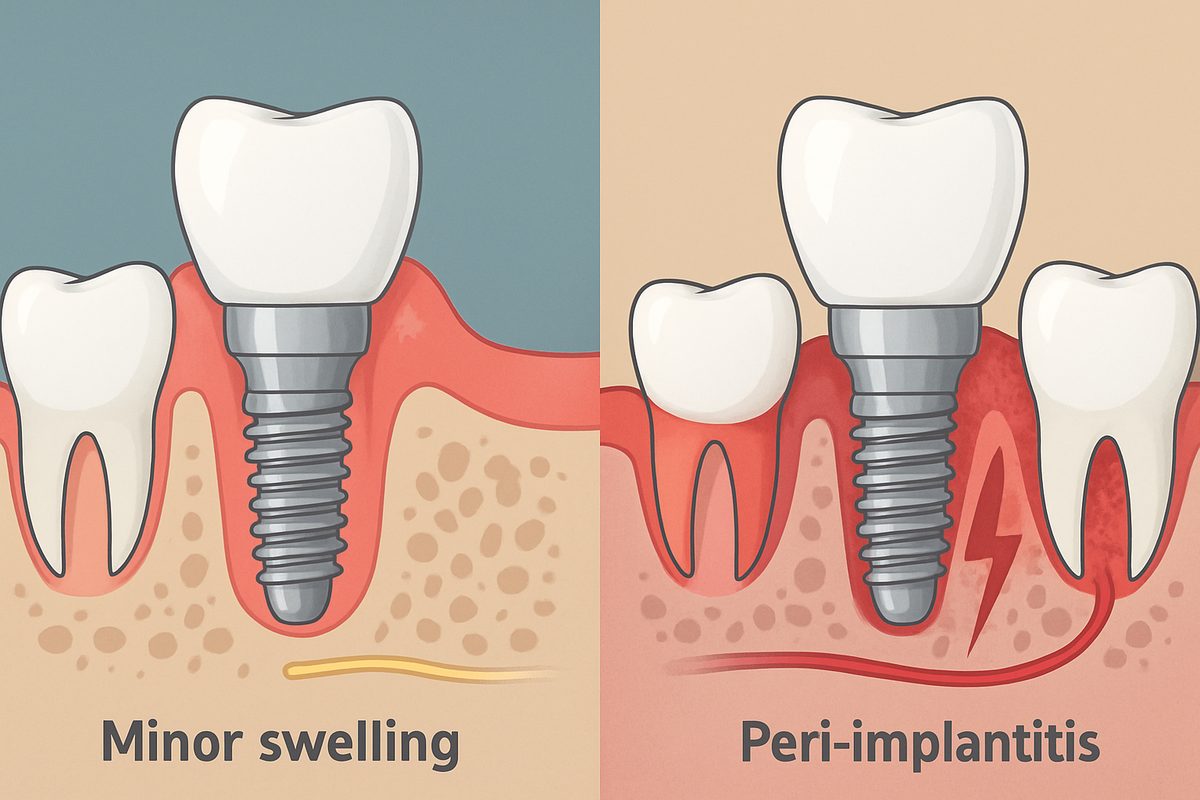
Dental implants are a common and effective way to replace missing teeth, but knowing about tooth implant long term side effects helps you make an informed choice. This article explains what a dental implant is, the difference between short-term healing problems and true long-term complications, who is at higher risk, how good care lowers risks, daily maintenance tips, when to call your dentist, and why experienced teams matter. Read on so you can weigh benefits and risks before moving forward.
What Is a Dental Implant?
A dental implant is a titanium screw placed into the jaw to act as a tooth root. Major parts include the dental implant (root), the abutment (connector), and the tooth crown (visible tooth). Over months the dental implant integrates with bone in a process called osseointegration, which gives strong support for chewing and looks like a natural tooth when finished.
Short-Term vs. Tooth Implant Long Term Side Effects
Common short-term effects
Short-term issues happen right after surgery and usually resolve in days to weeks. Expect pain, swelling, bruising, minor bleeding, and occasional temporary nerve irritation. Most patients follow a short healing timeline: 1–2 weeks for soft tissue and several months for bone to integrate fully.
Potential long-term side effects
Tooth implant long term side effects are less common but important. They include peri-implantitis (infection/inflammation around the dental implant) that can cause gradual bone loss and dental implant failure; gum recession that exposes metal margins; mechanical problems like screw loosening, tooth crown wear, or chipping; rare chronic numbness from nerve injury; sinus problems for upper implants placed too close to the sinus; and esthetic changes as gums or bone resorb over years.
Who Is More at Risk?
Certain factors raise the chance of tooth implant long term side effects: past or active gum disease, smoking, uncontrolled diabetes, poor oral hygiene, heavy teeth grinding (bruxism), low jawbone volume, prior head/neck radiation, and some medications (like certain osteoporosis drugs). A clear medical and dental history helps identify these risks before treatment.
How Risks Are Reduced — What to Expect from Good Care
Good teams reduce risk through a full pre-op evaluation, including medical history and CBCT 3D imaging for bone assessment. Digital treatment planning and guided surgery improve placement accuracy. Treating gum disease first, adding bone grafts when needed, and using precise dental implant positioning all lower long-term problems. Regular follow-up and maintenance plans are part of safe care.
Daily Care and Long-Term Maintenance
Home care matters: brush twice daily and clean between teeth with floss or interdental brushes designed for dental implants. Professional cleanings every 3–6 months are common, depending on risk. Hygienists check for mobility, pockets, bleeding, and bone loss on X-rays. If you grind your teeth, a nightguard or occlusal adjustment can prevent mechanical failures.
When to Call Your Dentist
Contact your dentist right away for increasing pain, swelling that won’t go down, pus or drainage, a loose or shifting crown, new numbness, or visible changes in gums or the implant. Early evaluation can often save an implant or stop a problem from getting worse.
Why Experienced, Technology-Forward Teams Matter
Teams that combine surgical and prosthetic expertise and use CBCT, guided surgery, digital scans, and an on-site lab help reduce tooth implant long term side effects. Dental Associates of Colorado uses prosthodontic and surgical leadership, digital workflows, and an in-house lab to plan and deliver predictable implant care at their Aurora and Westminster locations.
Tooth Implant Long Term Side Effects: What to Know Before You Move Forward
If you’re considering dental implants, contact us to schedule a consultation to review your risk factors, see 3D imaging, and get a personalized plan. A second opinion or a clear maintenance plan can help you choose the safest, most predictable path for replacing teeth.