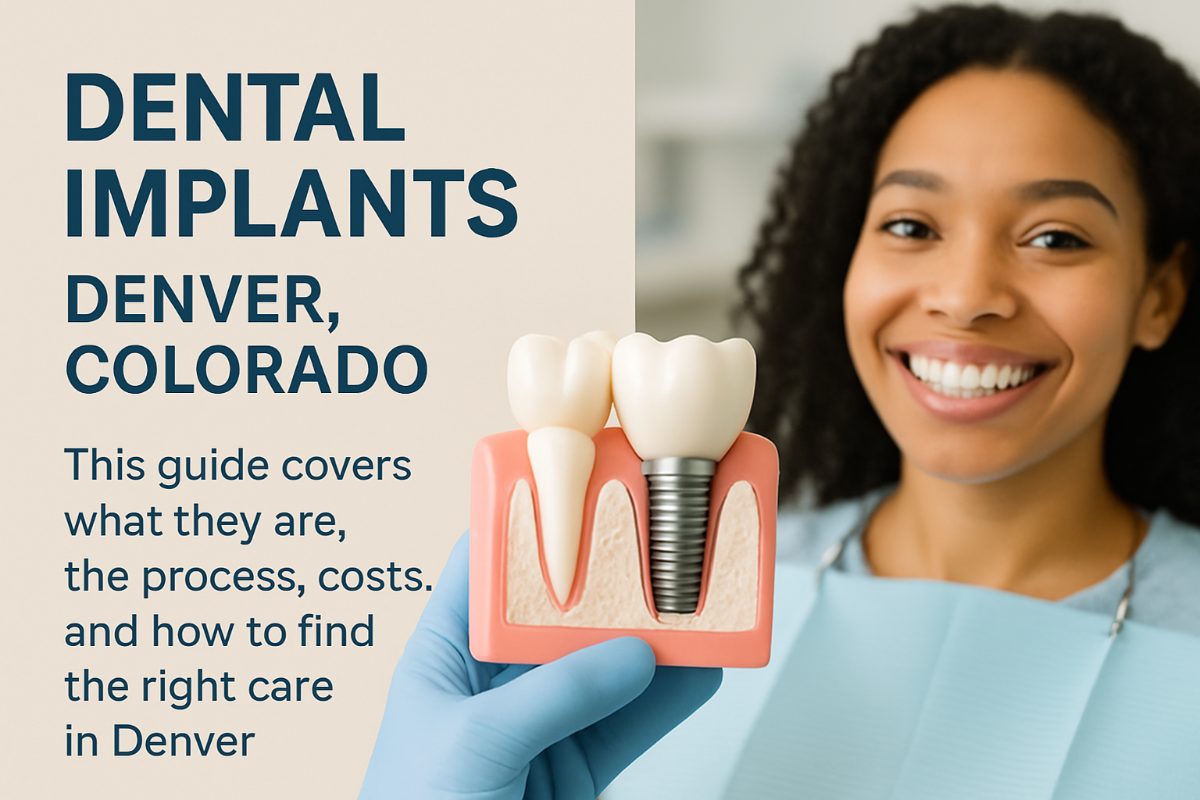
Thinking about a dental implant? This guide explains what a dental implant is, who may benefit, and expectations from evaluation to recovery. It also covers common considerations, cost factors, and how to choose care in the Aurora, CO area.
What is a dental implant?
A dental implant is a permanent restorative solution designed to replace a missing tooth. The implant system consists of three primary components: a dental implant fixture, an abutment, and a crown. The implant fixture, typically made of titanium or zirconia, is a small, screw-shaped post surgically placed into the jawbone. This fixture acts as an artificial tooth root. An abutment connects the implant fixture to the prosthetic tooth (crown). The crown is the visible, custom-fabricated tooth restoration that sits above the gum line. Through a biological process called osseointegration, the implant fixture integrates directly with the surrounding bone, creating a stable and durable foundation for the replacement tooth. Implant materials: Most dental implants are made of titanium due to its biocompatibility and proven ability to osseointegrate with bone. For individuals with metal sensitivities, zirconia implants offer a metal-free alternative. Compared to traditional dentures or bridges, dental implants can offer several advantages, including enhanced chewing function, preservation of adjacent natural tooth structure, stimulation of the jawbone to prevent bone loss, and a more natural feel and appearance.Who is a good candidate for a dental implant?
Ideal candidates for dental implants typically have one or more missing teeth, adequate jawbone density to support the implant fixture, and healthy gum tissues. Generally, patients should be in good overall health, and any existing medical conditions, such as diabetes, should be well-managed. Age alone is not usually a limiting factor for dental implant candidacy. When extra treatment may be needed: Some patients may require additional procedures like bone grafting or a sinus lift to augment the jawbone sufficiently to support an implant. Individuals who smoke or are taking certain medications, such as some osteoporosis drugs, may have an increased risk of complications and will require a thorough assessment and customized treatment plan. A comprehensive dental examination, including advanced imaging like X-rays or a CBCT 3D scan, is essential for determining if dental implants are appropriate for your specific situation.The dental implant procedure and recovery
Step-by-step timeline
- Consultation and imaging: exam, X-rays or CBCT 3D scan, and a treatment plan.
- Implant placement: the implant is surgically placed into the jawbone under local or IV sedation.
- Osseointegration: bone grows around the implant over 3–6 months to secure it.
- Abutment and crown: once stable, the abutment is attached and a custom crown is placed.