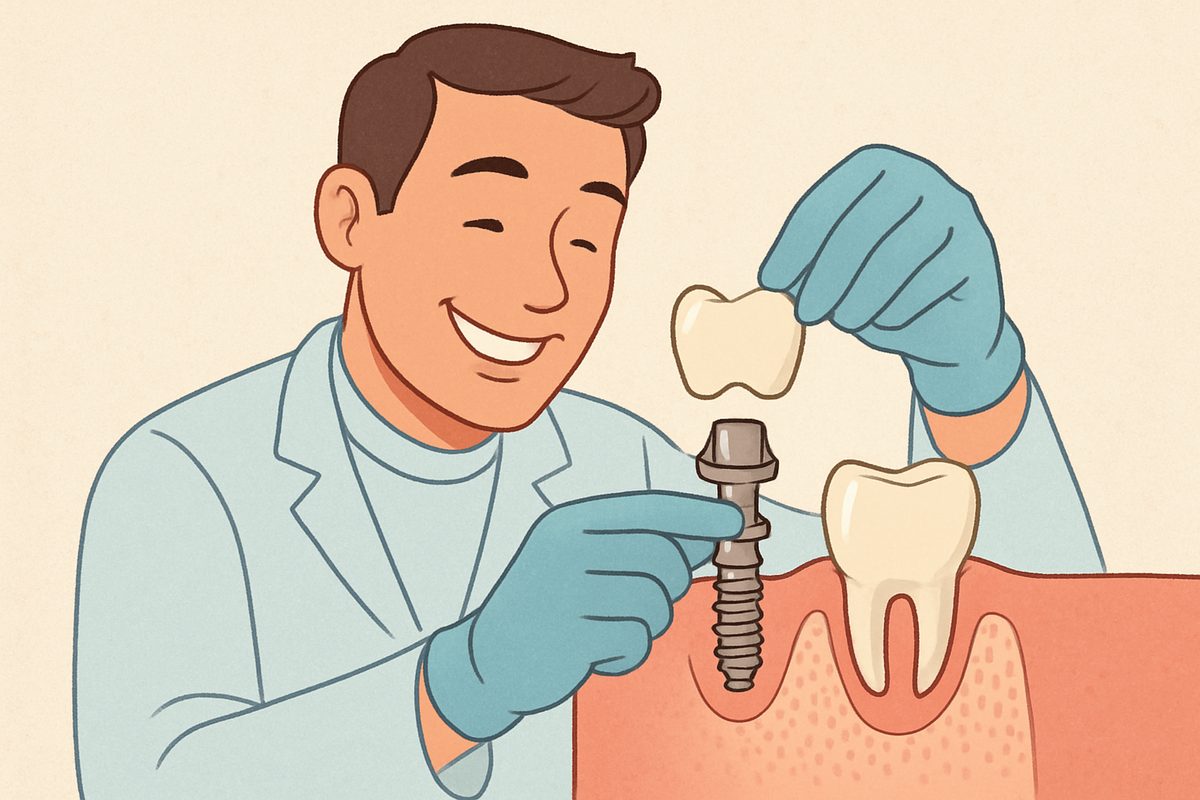
An implant crown procedure replaces a missing tooth by attaching a custom-fabricated crown to a dental implant, which is surgically placed in the jawbone. This guide outlines the typical stages, from initial planning to recovery, to help patients understand the process.
Overview: What is an implant crown procedure?
An implant crown procedure involves either placing a new dental implant and subsequently attaching a crown, or simply fitting a crown to an implant that has already integrated with the jawbone. The full process typically includes implant surgery (if required), a healing period for osseointegration (bone fusing to the implant), placement of an abutment, and finally, delivery of the custom crown. Crown-only visits, where the implant is already integrated, are generally shorter than full implant placements.
Before the procedure: evaluation and planning
Consultation and imaging
Your first visit includes an exam and discussion of goals. Digital scans and CBCT 3D imaging are utilized to accurately map the bone structure, nerve pathways, and determine the optimal position for implant placement, ensuring the subsequent crown will integrate naturally and function properly.
Medical and dental preparation
It is important to provide a complete list of current medications and your medical history. In some cases, preparatory procedures such as tooth extractions or bone grafting may be necessary before implant placement to ensure sufficient bone volume. You will receive pre-operative instructions regarding dietary restrictions, medication adjustments, and arranging transportation if sedation is chosen. Sedation options, including nitrous oxide, oral medications, or IV sedation, are available to enhance your comfort during the procedure.
During the implant crown procedure: step-by-step
If implant is being placed
Local anesthesia is administered to numb the treatment area. If selected, additional sedation also helps maintain comfort. The dental surgeon carefully places implant into the jawbone. . If bone volume is insufficient, a bone graft may be performed concurrently. Following placement, the site is closed, and in some instances, a temporary restoration may be provided. This allows you to maintain oral function and aesthetics while the implant undergoes osseointegration, a healing process that can take several months for the bone to fuse with the implant.
If implant is already integrated — crown delivery
If your implant is healed, the implant crown procedure typically starts with uncovering the implant (if needed) and attaching an abutment. The dentist takes a digital impression or intraoral scan, verifies shade and shape, and seats the final crown. During crown-fitting steps the doctor checks bite, fit, and appearance before permanently cementing or securing the crown.
After the procedure: recovery and care
Normal healing timeline
Following implant placement, it is normal to experience mild soreness and swelling for a few days. If only a crown is being placed on an already integrated implant, discomfort is usually minimal. Follow-up appointments will be scheduled over the next few weeks to monitor healing and confirm proper crown fit. The full osseointegration process takes several months, and careful long-term care is important for the longevity of the implant.
Home care and what to watch for
Use over-the-counter pain relievers as recommended by your dentist and maintain good oral hygiene by gently brushing and flossing the area. It is advisable to avoid very hard or sticky foods for a brief period immediately following placement. Contact your dental provider if you observe any signs of infection, such as increasing pain, redness, or swelling, or if you experience heavy bleeding, a loose crown, or persistent discomfort.
How your crown is made: technology and lab work
Digital scans and shade matching create a crown that fits and looks natural. An in-house lab or same-day milling can speed the process and improve adjustments. Materials like zirconia and titanium offer strong, long-lasting, esthetic results.
Who should perform your implant crown procedure?
Look for a team with prosthodontic and surgical expertise. Coordinated care between a prosthodontist and an oral surgeon improves esthetics, function, and predictability for complex cases.
About Dental Associates of Colorado
Dental Associates of Colorado offers a multidisciplinary team with on-site lab, digital workflows, and sedation options. Their Aurora and Westminster locations provide same-day solutions and coordinated care for implant restorations. Conclusion / Next steps Bring your questions to your next visit and ask about imaging, sedation, and timeline. To schedule a consultation for an implant crown procedure, contact the office to discuss a personalized plan.